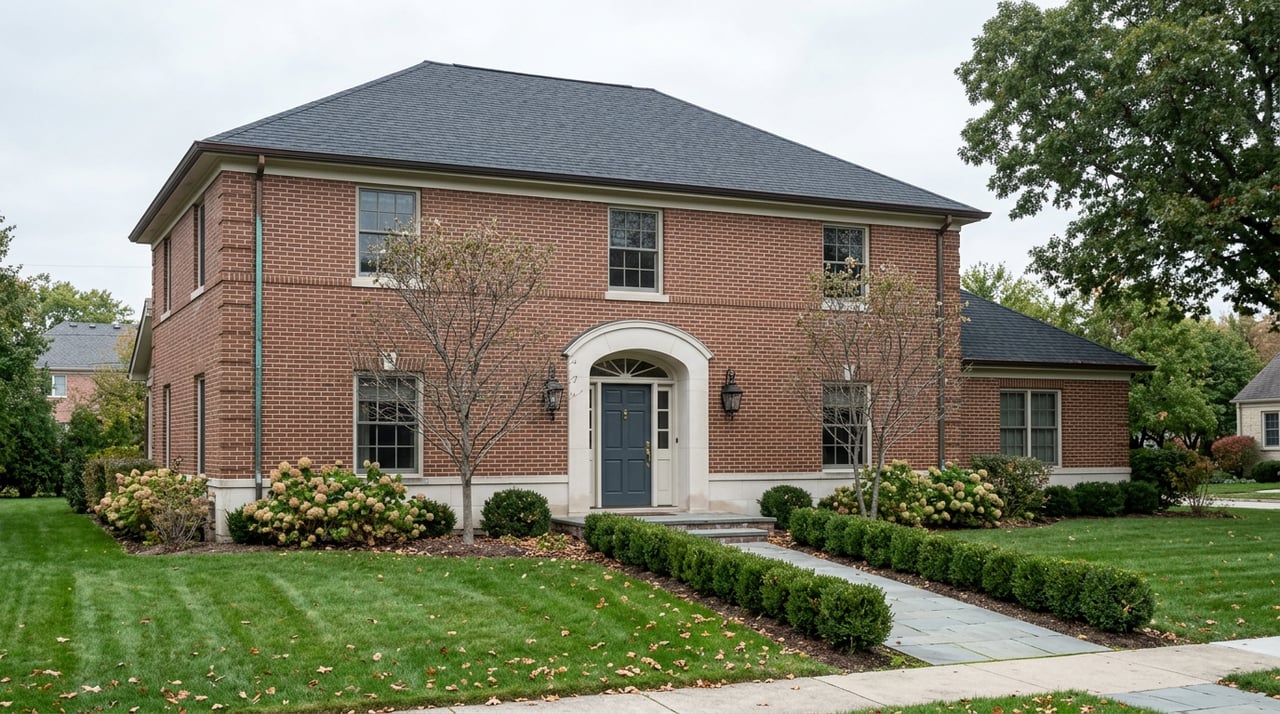
Ask whether a two-unit rowhouse with a tenant in the basement unit still falls under DC's tenant purchase law, and for most buildings built or converted in the last fifteen years, the honest answer this year is no. Ask whether that "no" means a buyer can skip a step before closing, and the honest answer is also no. Those two answers used to be the same thing in Washington, DC. Since December 31, 2025, they aren't, and the space between them is where closings are getting stuck.
The law in question is the Tenant Opportunity to Purchase Act, TOPA, which has given DC tenants a legal right to buy their building before a third party can since 1980. The DC Council spent 2025 rewriting large parts of it through the Rebalancing Expectations for Neighbors, Tenants, and Landlords Act, known as the RENTAL Act. Mayor Bowser signed it on November 13, 2025, Congress let its review period lapse without objection, and it took effect on December 31, 2025. If you're writing an offer on a DC property that has, or recently had, a tenant, this is the law that governs what has to happen between contract and closing.
What the RENTAL Act Actually Changed
The headline change is a new fifteen-year window. Any building that received its certificate of occupancy within the past fifteen years is now exempt from TOPA's Offer of Sale requirement, and the clock runs retroactively. A building that got its CO ten years ago is exempt for five more years. A brand-new building is exempt for the full fifteen.
The second major change touches the properties a lot of DC buyers actually shop for: small multi-unit rowhouses. Buildings with two to four rental units are now exempt from TOPA, unless the building is owned in majority by a business corporation. Because most small DC landlords hold property through an LLC, a trust, or as individuals rather than a corporation, the exemption covers the overwhelming majority of 2-4 unit sales going forward. Title firm Federal Title, which handles TOPA compliance for DC closings, describes it plainly: it will be rare for a 2-4 unit building to still trigger TOPA's purchase rights.
Single-family homes have had a version of this exemption since 2018, when the Council removed the Offer of Sale requirement for single-family dwellings except in cases involving elderly or disabled tenants who signed a lease before the amendment took effect. That carve-out still stands. What changed in 2025 was extending a similar logic to new construction and small multi-family buildings, which is where most first-time buyers and small investors actually shop in DC.
Here's how the categories break down:
| Property type | TOPA status as of late 2025 | What still has to happen before closing |
|---|---|---|
| New construction, CO issued within 15 years | Exempt from Offer of Sale | Notice of Transfer required; existing tenants had to be told in writing of exempt status by March 31, 2026 |
| 2-4 unit building, not majority corporate-owned | Exempt from Offer of Sale | Same Notice of Transfer requirement; tenants get 45 days to contest it |
| Single-family home with a tenant | Exempt from purchase rights since 2018 | Owner must notify the tenant within 3 calendar days of accepting an offer; elderly or disabled tenants under pre-2018 leases may retain limited rights |
| 5+ unit building, older than 15 years, rent-controlled | Still fully subject to TOPA | Offer of Sale triggers a tenant association window, a negotiation period, and a financing window that can run past a year |
Exempt Doesn't Mean Paperwork-Free
This is the part that trips people up. An exemption from the Offer of Sale requirement is not the same as an exemption from notice. Owners of exempt properties still have to send tenants something called a Notice of Transfer, a document that discloses whether rents or management will change, whether any affordability restrictions apply, and the specific legal basis the owner is using to claim the sale isn't a TOPA sale at all. Once that notice goes out, tenants still get 45 days to register a tenant association if they want to contest it. Legitimate transfers rarely get contested at that stage, but the window exists regardless of how airtight the exemption looks on paper.
There was also a hard deadline attached to the transition. Landlords of buildings that became newly exempt when the RENTAL Act took effect had to notify their existing tenants in writing of that exempt status by March 31, 2026. That deadline has already passed. If you're touring a DC property today that qualifies for the new construction or small-building exemption, and the seller can't produce evidence that notice went out, that's not a minor administrative gap. It's the kind of missing document that stops a title company from insuring the sale.
Kevin Bayly, a title attorney who sits on the DC Land Title Association board and handles these closings regularly, put it bluntly in describing how often this goes wrong: deals get "completely railroaded by the inability to comply with these rules." Nobody wins when that happens. Not the seller who thought a modern building meant a clean exit, not the buyer who assumed a signed contract was the hard part, not the tenant caught in the middle of a transaction they didn't ask to be part of.
Where the Old Rules Still Apply in Full
Not every DC property gets the benefit of the new exemptions. Buildings with five or more units that are older than fifteen years and still under rent control remain fully subject to TOPA's original process. That process is slow by design. After an Offer of Sale, tenants get 45 days to form a tenant association and file a Statement of Interest, or 30 days if an association already exists. From there, they have 120 days to negotiate terms with the owner, followed by another 120 to 240 days to arrange financing depending on the lender involved. Add it up and the DC Policy Center, which studied more than a decade of TOPA activity, found that transactions can be delayed by more than a year, up to 420 days in problem cases, because of regulatory uncertainty and legal challenges layered on top of that timeline.
This is also where TOPA activity has always concentrated. The same DC Policy Center research found that over 94 percent of TOPA transactions and 96 percent of tenant association formations happened in rent-controlled buildings built before 1978, most of them under 50 units. The RENTAL Act's exemptions were built to leave that segment largely untouched, and DC Policy Center's own analysis confirms it: over 80 percent of multifamily rental buildings in the District, representing 65 percent of rental units, remain subject to TOPA under the new law. If you're shopping for an older apartment building or a pre-1978 rowhouse conversion with five or more rental units, assume the long version of this process applies until you've confirmed otherwise.
None of this is theoretical friction. A DC title firm, Gormley Law Office, has estimated that as much as a third of pending DC sales each month get delayed over perceived or actual non-compliance with TOPA. That's not a rare edge case. It's a monthly occurrence across the District, and it's exactly why title underwriters in DC tend to hold sellers to a higher documentation standard than the statute technically requires.
What This Means If You're Under Contract
If you're buying a property in DC that has a tenant now, or had one recently, the practical move is to verify the paperwork trail before you're deep into a financing contingency. Ask your agent or attorney to confirm:
- The certificate of occupancy date, if the seller is claiming the 15-year new construction exemption
- Whether the property is majority-owned by a business corporation, which would remove the small-building exemption for 2-4 unit properties
- Proof that a Notice of Transfer was sent to any current or recent tenant, including the date it went out
- Whether the 45-day contest window has fully run without a tenant association being registered
- For single-family homes, proof the seller gave notice within 3 calendar days of accepting an offer
It's also worth remembering that DC's Department of Housing and Community Development has said publicly that full implementing regulations interpreting the RENTAL Act's more ambiguous provisions could take up to two years to finalize. In the meantime, DHCD is providing guidance case by case. That means some of the finer points, like exactly what qualifies as a "principal asset" for purposes of triggering a sale, are still being worked out in real time. A buyer who assumes the law is fully settled because it took effect in December 2025 is assuming more certainty than currently exists.
A Short FAQ
Does a Notice of Transfer give tenants the right to buy the property? No. A Notice of Transfer only tells tenants that the sale is happening and explains why the owner believes TOPA doesn't apply. It's a disclosure, not a purchase right.
If the unit has been vacant for months, does TOPA still matter? It can. TOPA rights and notice requirements generally attach to whether the property had a tenant of record at the relevant point in the sale process, not simply whether someone is living there on closing day. Confirm the occupancy history rather than assuming a vacant unit removes the issue.
Is buying a single-family home with a tenant simpler than buying a small multi-unit? In most cases, yes. Single-family homes have been exempt from full TOPA purchase rights since 2018, with the notable exception of elderly or disabled tenants under pre-2018 leases. The seller still owes the tenant notice within 3 calendar days of accepting an offer, so the paperwork trail matters even here.
How do I know if the seller's exemption claim will hold up with a title company? Ask to see the actual Notice of Transfer and any tenant acknowledgment forms before you're too far into your contingency period. Title underwriters in DC routinely ask for more documentation than the statute strictly requires, precisely because so many delayed closings trace back to this step.
Buying in DC with a tenant in the picture isn't a reason to walk away from a good property. It's a reason to build in one more verification step before you're locked into a closing date. The Anthony Lacey Home Team works these DC transactions regularly across the District, Maryland, and Northern Virginia, and can help you confirm exactly where a property's TOPA paperwork stands before you're under contract. Schedule a free consultation to talk through what's involved with your specific address.