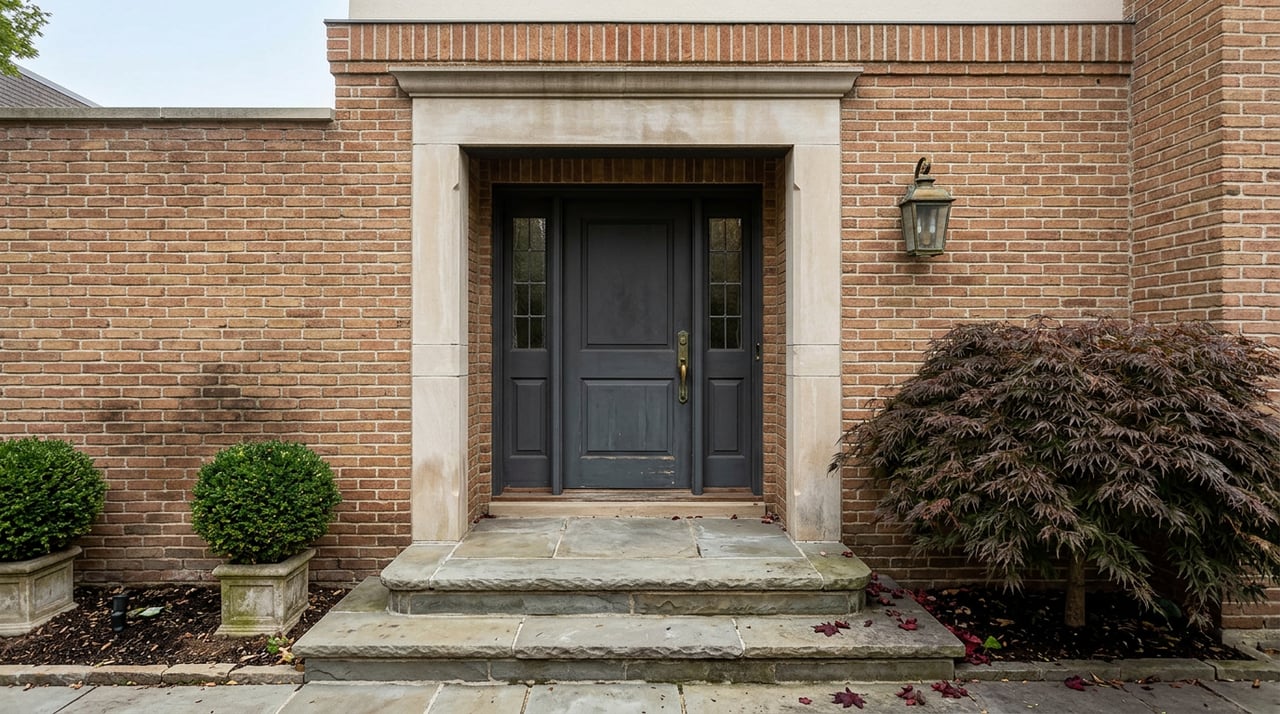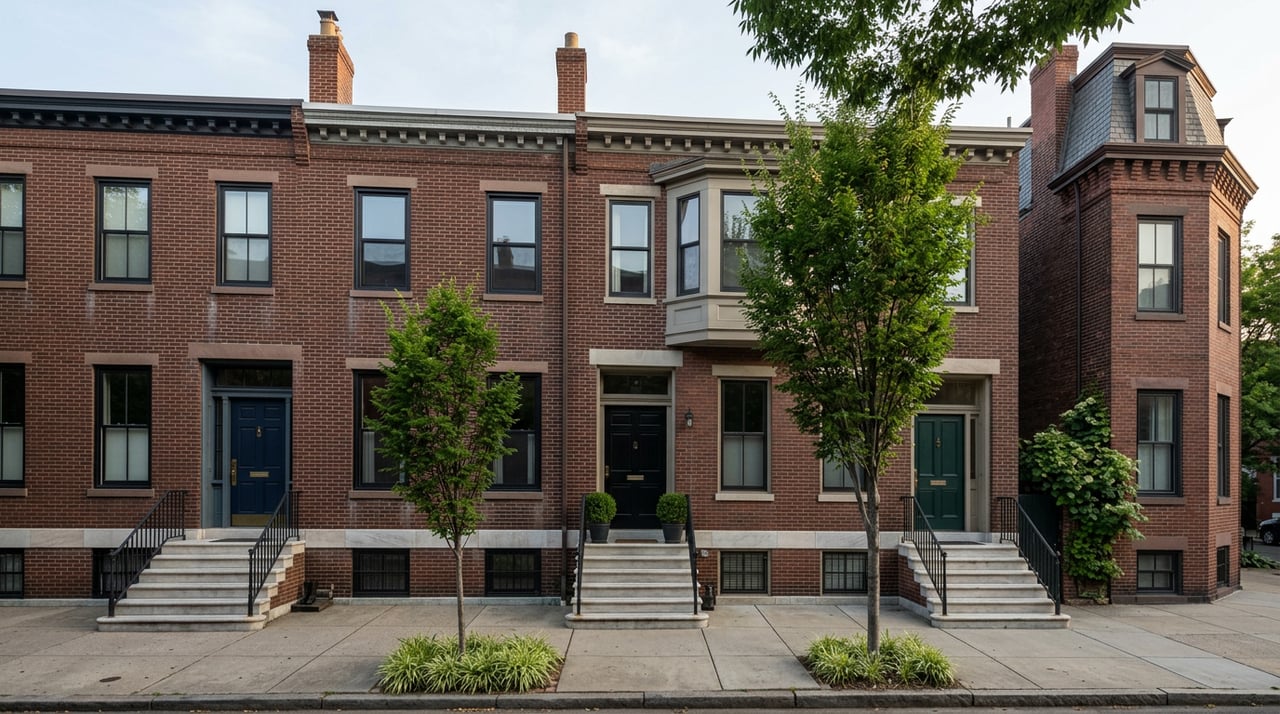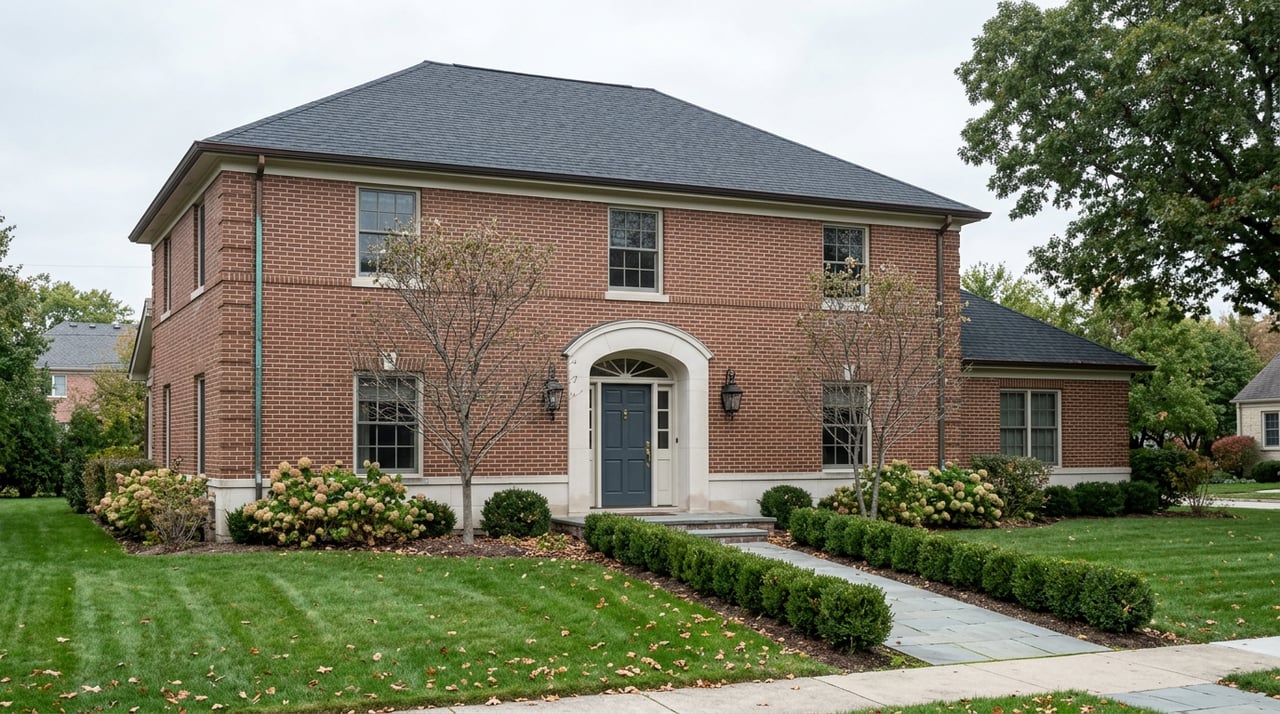
Drive down Georgia Avenue through Silver Spring and then turn onto almost any side street off it, and the housing stock barely changes. Same brick colonials, same 1950s Cape Cods, same price range on the appraisal sheet. As of November 1, 2025, though, the two blocks stopped being zoned the same way. One of them can, in theory, become a duplex or a triplex. The other cannot. If you are comparing two nearly identical houses in Silver Spring right now, one on a corridor and one a block behind it, the honest answer to "does that zoning line matter" is more complicated than either a portal listing or a yard sign would have you believe.
What actually changed on November 1
The rule is Montgomery County's Zoning Text Amendment 25-02, part of a package County Council members Andrew Friedson and Natali Fani-González called More Housing N.O.W. The council approved it on July 22, 2025, on an 8-3 vote, and it took effect that November. It lets certain parcels currently zoned exclusively for single-family houses redevelop into duplexes, triplexes, townhomes, or small apartment buildings, capped at 40 feet in height and 1.25 floor area ratio, roughly the same building envelope a single large house could already fill.
The eligibility test is narrow and specific, which matters more than the headline. A parcel qualifies only if its front lot line abuts a corridor that is at least 100 feet wide and carries three existing travel lanes. In practice, that means Georgia Avenue and Connecticut Avenue, not the residential streets that feed into them. The county has said the change touches roughly 2,500 lots total, concentrated in the southeast quadrant of the county around Bethesda, Silver Spring, Glenmont, and Wheaton. It explicitly does not reach quiet cul-de-sacs.
There is also a built-in cost. Any development of three or more units has to set aside at least 15 percent of them as workforce housing, affordable to households earning up to 120 percent of the area median income, currently $157,440 for a couple. And nothing here is automatic. A property owner who wants to build a duplex still has to go through the county's standard site plan review process before a shovel goes in the ground.
So the honest description of ZTA 25-02 is not "Silver Spring got upzoned." It is "about 2,500 specific corridor-front lots in Silver Spring and a few neighboring submarkets gained the legal right to apply for something they couldn't apply for before, subject to a review process, a height cap, and a below-market unit requirement." That is a real change. It is also a much smaller one than the public debate around it suggested, and the debate was loud. County Executive Marc Elrich opposed the measure publicly, arguing the income threshold was too high to count as genuine affordability, and protesters showed up at council meetings with signs sharp enough that Council President Kate Stewart had to pause a session to ask for civility.
The part that happened first and matters more
Here is the detail that changes how you should think about all of this. Sixteen months before ZTA 25-02 took effect, Montgomery County adopted a rent stabilization law, in July 2024, that caps how much landlords can raise rent on existing units. Housing analyst Jay Parsons pulled state building permit data to see what happened to new multifamily construction in the county after that law took hold, and the numbers are stark. In the eight months from January through August 2024, before the rent law took effect, Montgomery County issued permits for 2,093 multifamily homes. The rest of Maryland's counties combined issued 2,274 in that same stretch, meaning Montgomery County alone was responsible for nearly as much multifamily permitting as every other county in the state put together.
In the same eight-month window of 2025, after the rent stabilization law had been in force for a year, Montgomery County issued permits for just 54 multifamily units. The rest of Maryland stayed almost exactly flat, at roughly 2,248 permits.
| Period | Montgomery County multifamily permits | Rest of Maryland multifamily permits |
|---|---|---|
| Jan–Aug 2024 (before rent law) | 2,093 | 2,274 |
| Jan–Aug 2025 (after rent law) | 54 | 2,248 |
That is not a slowdown. It is a collapse specific to one county, in a state where every neighboring jurisdiction kept building at the same pace. The zoning door on Georgia Avenue opened in November 2025 into a financing environment where the economics of building new rental units in Montgomery County had already fallen apart the year before.
Why this matters if you're pricing a corridor-front house
Put those two facts next to each other and you get the actual, non-obvious story: a house on an eligible Silver Spring corridor gained a legal right to become multifamily housing at almost the exact moment the county's own rent policy made building multifamily housing there financially unappealing. The zoning bonus and the economic disincentive arrived back to back, from the same government, and they point in opposite directions.
That has a direct, practical consequence for anyone comparing two similar houses in Silver Spring right now. If you're a buyer and a listing agent, or an online estimate, is implying that a Georgia Avenue or Connecticut Avenue address carries a redevelopment premium because of the November 2025 rule, ask what that premium is actually pricing in. A right to apply for a permit is not the same as a project that pencils. Given how sharply multifamily permitting has already fallen off in this county, treating that zoning eligibility as an imminent teardown-to-triplex play is a bet against the most recent data, not a bet backed by it.
If you're a seller on an eligible corridor lot, the same logic cuts the other way. Don't assume a buyer's appraisal or a comp search will automatically credit your parcel for zoning optionality that few builders currently have the appetite to use. The value is real in the sense that the right exists on paper. It is not yet real in the sense of showing up in closed transactions, because there aren't many multifamily projects moving through the pipeline to compare against.
The county itself seems to be hedging on how fast this will move. As part of the ZTA, the council added a requirement for a biannual impact report starting in 2027 to track what the zoning change is actually producing on the ground, which is itself a signal that nobody on the council was confident enough in an immediate wave of new duplexes to skip the monitoring.
Don't confuse this with the Eastern Silver Spring conversation
There is a second, separate rezoning conversation happening in Silver Spring right now, and conflating it with ZTA 25-02 will only confuse your read on any specific address. The Eastern Silver Spring Communities Plan, tied to the county's long-range Thrive Montgomery 2050 initiative, is looking at a broader zoning shift, including a proposed move to a "Commercial Residential Town" designation for parcels near major transit investments in the Indian Spring area. That plan has generated its own local fight this year, including yard-sign protests near a YMCA property that opponents have framed as a done deal for a 120-foot, thousand-unit building, when in fact any such height is a legal ceiling that would only apply if the property owner chose to redevelop, not a confirmed project.
That plan has not been adopted. ZTA 25-02 has. If you're evaluating a specific Silver Spring address, the question to ask is which of these two processes actually touches that parcel, and whether the zoning change in question is already law or still a recommendation working through hearings.
A short FAQ
Does this zoning change apply to my house if it's on a quiet residential street near Georgia Avenue? Only if your front lot line directly abuts an eligible corridor at least 100 feet wide with three existing travel lanes. A house one block off Georgia Avenue, even if it's close, does not qualify under ZTA 25-02.
Can a developer build a duplex on an eligible lot right now without any further approval? No. Every project still has to go through the county's standard site plan review process. The zoning change expands what's legally possible, not what's automatically permitted.
Is the Eastern Silver Spring Communities Plan the same thing as ZTA 25-02? No. ZTA 25-02 is an already-effective, countywide corridor rule. The Eastern Silver Spring plan is a separate, still-pending, more localized rezoning conversation tied to the county's longer-range Thrive Montgomery 2050 plan.
Does the rent stabilization law affect for-sale condos the same way it affects rental buildings? The permit data reflects multifamily rental construction broadly. Rent stabilization specifically caps rent increases on existing rental units, so its clearest effect is on the economics of building new rental housing, which is the housing type ZTA 25-02 was designed to unlock on corridor lots.
If you're trying to figure out what a specific Silver Spring address is actually worth, corridor zoning included, that's a conversation worth having with someone who tracks both the ordinance language and the permit data behind it. The Anthony Lacey Home Team can walk through your parcel's eligibility, your timeline, and what the current market will actually support. Schedule a free consultation to get a straight read before you price around a rule that hasn't fully played out yet.