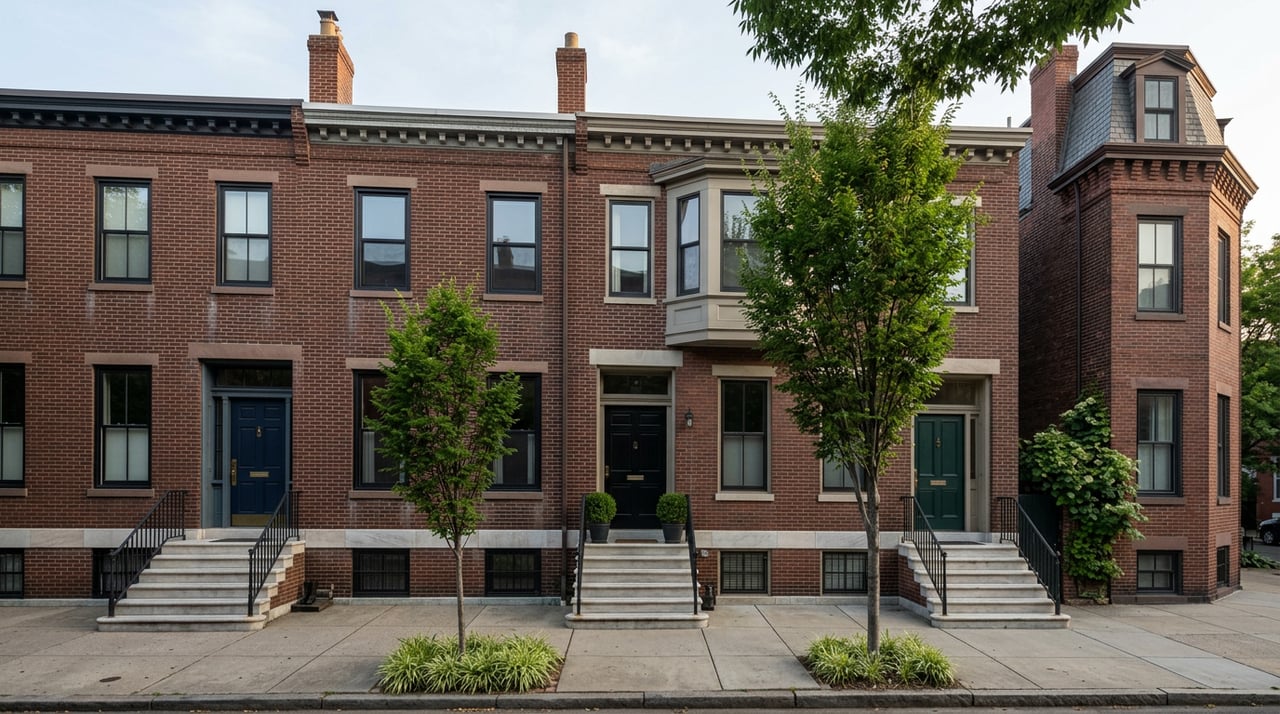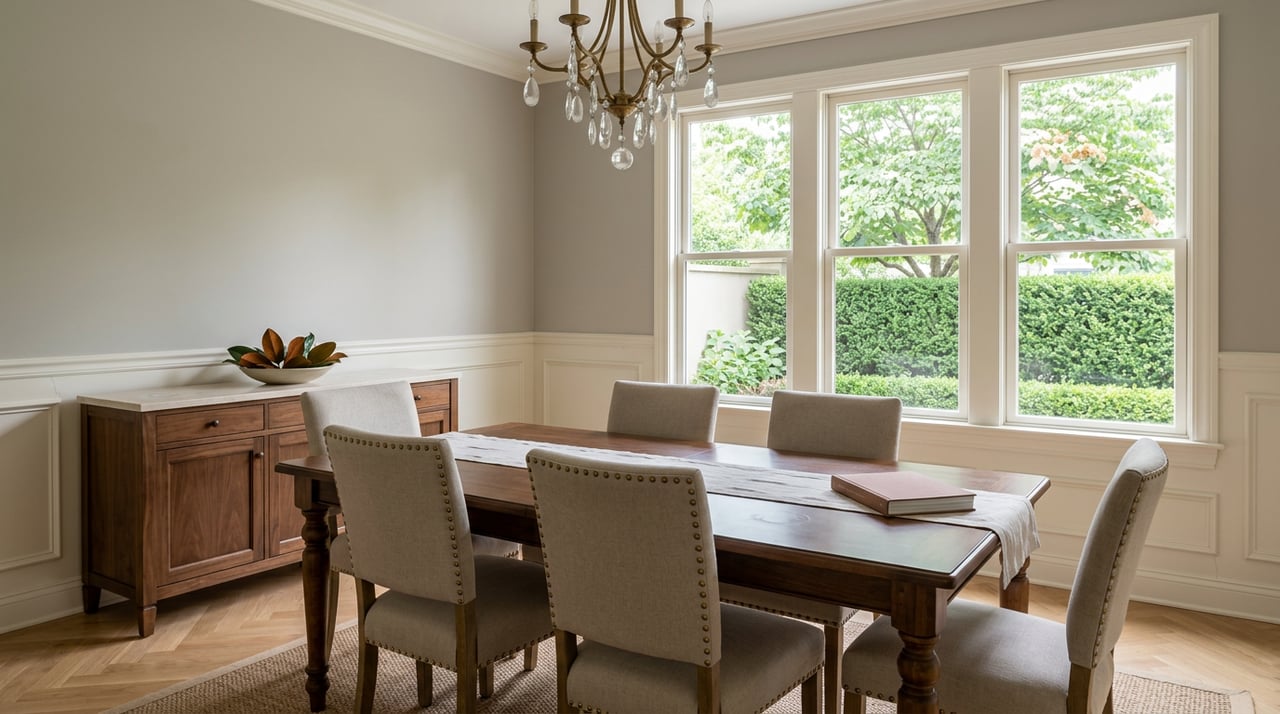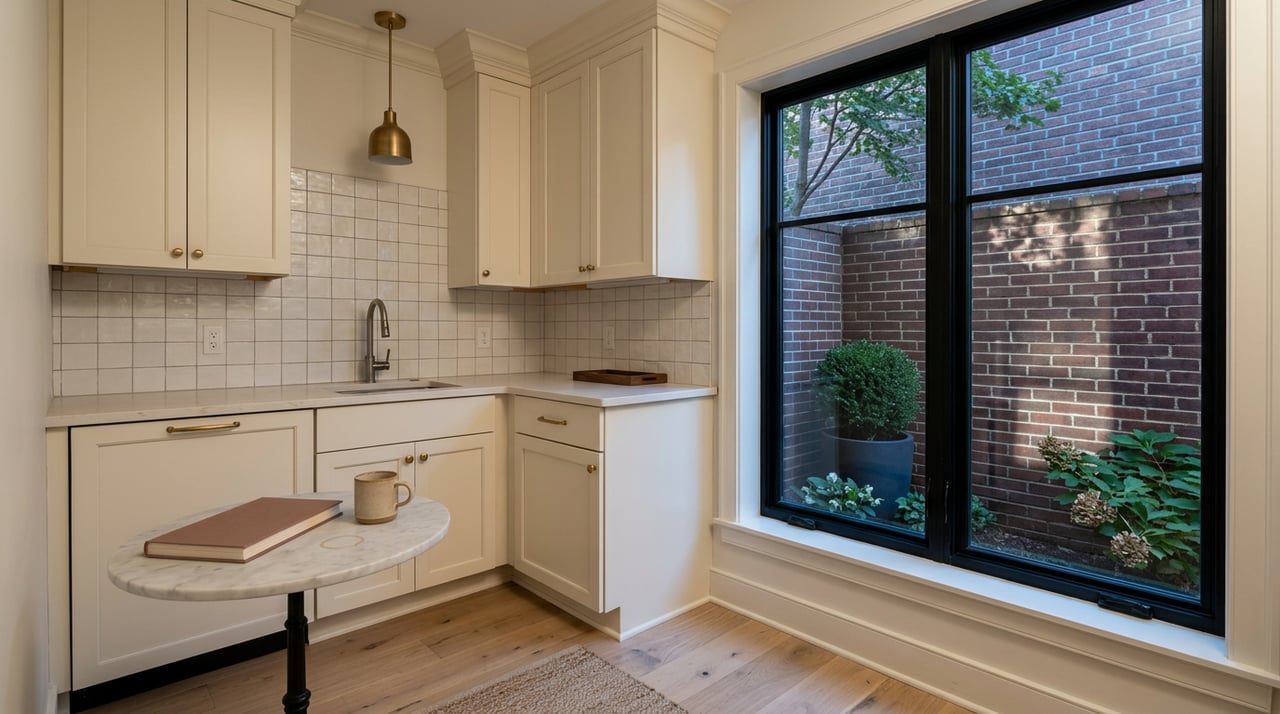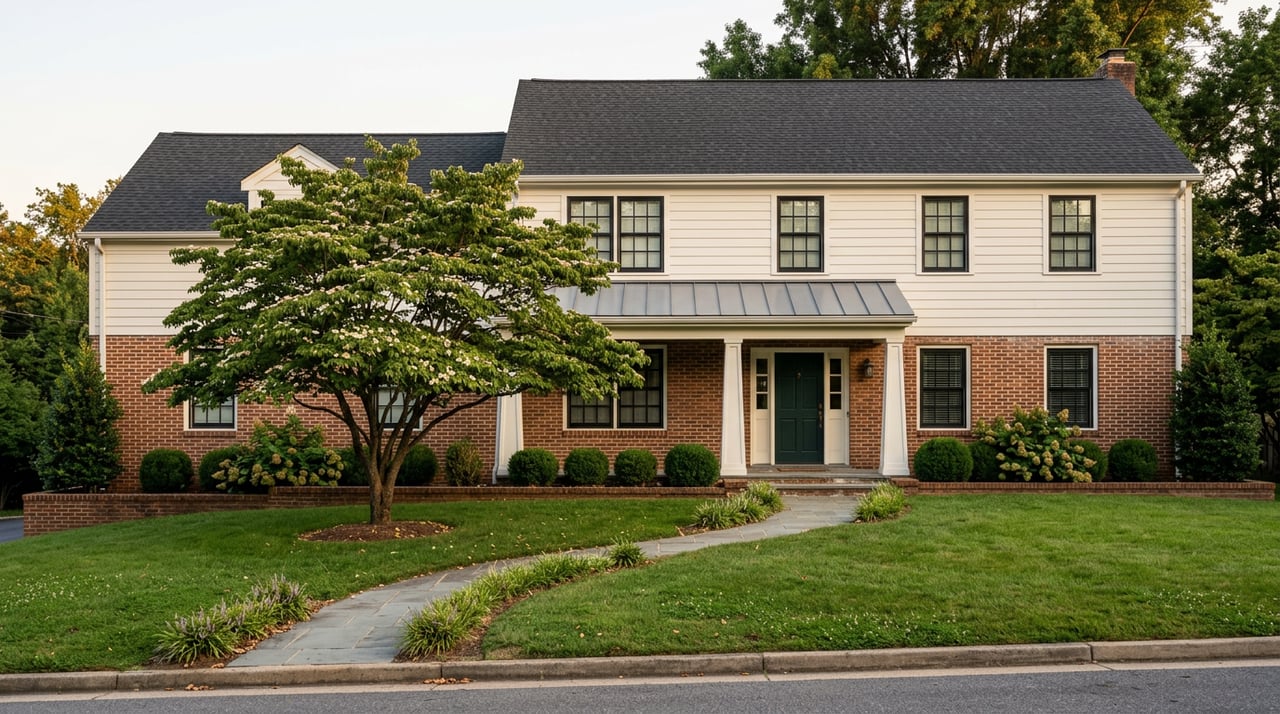
Drive west on Belair Drive on a Saturday morning and you pass split-level colonials from the early 1960s, mature oaks shading driveways barely wide enough for two cars, kids on bikes cutting through cul-de-sacs that Levitt and Sons platted before most of their current owners were born. Ten minutes later, past a gate and a golf course, you're looking at a custom estate with an elevator, four fireplaces, and a driveway so long the house is invisible from the street. Both addresses say Bowie, Maryland. Neither one sells anywhere near the number a home search site will hand you when you type in the city name.
That's the problem with treating "Bowie" as a single market. It isn't one. It's at least three, built in three different decades under three different sets of rules, and the citywide median is just the point where those three curves happen to cross.
The Number Sits Between Two Markets, Not Inside Either One
As of August 2026, Movoto's listing data puts Bowie's median list price at $559,000, or $246 per square foot, with homes spending a median of 54 days on the market. Redfin's most recent update, from June 2026, showed the median sale price closer to $510,000. The gap between those two figures is normal (list price and closed price rarely match exactly), but the bigger issue is that neither number describes an actual neighborhood. No one is buying "the median Bowie home." They're buying a specific house on a specific street built in a specific decade, and that decade explains most of what the median obscures.
Three subdivisions make the point clearly: Belair at Bowie, Fairwood, and Woodmore. Same city. Same school system boundaries in broad strokes. Wildly different products.
1961: What Levitt Built, and What It Still Costs
Belair at Bowie is the reason Bowie exists as a suburb at all. In August 1957, Levitt and Sons bought the 2,280-acre Belair estate, a colonial plantation and horse farm dating to the 1740s, for $1.75 million. Construction started in 1960, and the first six families moved in on October 17, 1961. Within a year, the community was adding roughly 75 new occupancies a week, and more than 1,500 families had already purchased or reserved a lot, according to the account preserved by WETA's Boundary Stones project. Most original lots ran about 8,400 square feet, and every home shipped with the era's version of "everything included": central air, landscaping, a built-in TV-FM antenna.
That construction era is still visible in the pricing. Individual sales on Belair Drive itself show the range: a 2,145-square-foot Levitt-built colonial sold for $610,000 in October 2025 after a full renovation and addition, while comparable homes nearby, less updated, have listed in the $375,000 to $460,000 band. The spread within Belair alone is often larger than the spread the citywide median suggests, because the deciding factor isn't location, it's whether a given owner has replaced the roof, the siding, and the systems that were new when Kennedy was president.
What Belair generally doesn't carry is a mandatory HOA structure layered on top of the purchase price. The original Levitt sections were built and sold as complete communities, not amenity-fee subdivisions, and many of those original streets still operate that way today. The Belair Mansion, built around 1745 for Provincial Governor Samuel Ogle and later home to a family that bred two Triple Crown winners, sits at the center of the community as a city-owned museum, a physical reminder that this neighborhood's identity was set before the term "master-planned community" existed.
2004: The Middle Product Nobody Talks About
Fairwood is the newer, in-between answer. The community traces to 2004 and has continued to build out since, with homes ranging from roughly 1,683 to 6,196 square feet, a spread wide enough to cover a modest colonial and a five-bedroom estate under the same neighborhood name. Unlike Belair, Fairwood was built around a formal homeowners association from the start, and that association charges real dues. One condo and villa section, Delight at Fairwood, lists a $77 monthly HOA fee, and residents in local forums have openly questioned why fees across the broader community run as high as they do.
Fairwood is the community that best fits the move-up buyer: newer construction than Belair, amenity infrastructure that Belair never had, and pricing that sits above the city's older stock without reaching into golf-course territory. It's also the segment that gets the least attention in generic market write-ups, because it doesn't have a dramatic story attached. It's simply the product built in the years between Bowie's founding era and its current luxury tier.
The Gate, the Golf Course, and the Number That Broke Away
Woodmore is where the citywide median stops being useful entirely. This is a gated community built around the Country Club at Woodmore, a golf course designed by Arnold Palmer, with dining at The Palmer Grill on site. As of February 2026, the trailing 12-month median sale price for homes in Woodmore stood at $708,750, up 9% from the year before, and active listings at that time ranged from $949,990 up to $2.4 million. Shopping anchors like Wegmans, Nordstrom, and Macy's sit at Woodmore Towne Center, a retail draw separate from the Bowie Towne Center that serves the rest of the city.
Put plainly, Woodmore's typical closed sale runs roughly 40% above Bowie's citywide median, and its upper listings run four to five times that number. A handful of estate sales in a low-volume luxury pocket can pull a citywide average upward without reflecting what a majority of Bowie buyers are actually purchasing. That's the mechanism behind the misleading median: it isn't fraud, it's arithmetic, blending a small number of very expensive transactions with a much larger number of ordinary ones.
| Community | Era Built | Typical Price Band | HOA Structure | Defining Feature |
|---|---|---|---|---|
| Belair at Bowie | 1960-1970s (Levitt & Sons) | Roughly $375K-$650K, individual sales, 2025-2026 | Largely none in original sections | Historic Belair Mansion and Stable Museum |
| Fairwood | 2004-present | Wide range across home sizes; specific HOA dues documented (e.g. $77/month, Delight at Fairwood) | Mandatory HOA from inception | Master-planned amenity structure |
| Woodmore | 1984-2011 build-out | ~$708K median (trailing 12 months, reported Feb 2026); active listings $949,990-$2.4M | Gated community HOA | Country Club at Woodmore, Arnold Palmer-designed course |
What This Means If You're Comparing Bowie to Other Options
If you're cross-shopping Bowie against other DMV suburbs using a single median price, you're comparing an average of three unrelated products against whatever single number another city produces. The more useful question isn't "what does Bowie cost," it's "which decade of Bowie am I actually shopping."
A buyer whose budget tops out in the $400s to low $500s isn't settling for less house by looking at Belair. They're looking at the product that was actually built for that price point, with the tradeoff being 1960s-era systems rather than new construction, and often no HOA overhead to budget around. A buyer who wants newer construction with amenity infrastructure and is comfortable with a real monthly HOA payment lands naturally in Fairwood. A buyer whose search starts at a golf course and a gate is shopping Woodmore, and should expect the comps, the taxes, and the closing math to look nothing like the rest of the city.
This same logic matters just as much on the seller side. An appraisal or a portal algorithm that defaults to "Bowie" comps without isolating the subdivision can misprice a Levitt-era colonial against Woodmore's estate sales, or undervalue a Fairwood listing by comparing it to older stock that never carried HOA dues. Getting the pricing strategy right starts with knowing which of these three markets a given address actually belongs to, not with the number a national site generates for the zip code.
If you're trying to figure out where your budget actually lands inside Bowie, or you're getting ready to list a home in one of these communities and want a pricing strategy built around the right comps instead of a citywide average, the Anthony Lacey team can walk through the specific subdivision data with you. Schedule a free consultation and we'll start with the market you're actually buying or selling into, not the one a search engine averaged together.