If you have ever wondered whether Columbia feels more like one town or a collection of smaller communities, the answer is yes to both. That can make your move feel exciting, but it can also raise practical questions about daily life, commuting, and where you may feel most at home. This guide breaks down how Columbia is organized, what the villages actually mean, and how the trails and lakefront areas shape everyday living. Let’s dive in.
How Columbia Is Set Up
Columbia is an unincorporated planned community in Howard County, founded in 1967 as part of James Rouse’s original vision. Today, it is home to about 100,000 residents and covers 32.2 square miles. Its planning structure was designed around housing, open space, village life, business uses, and a central Town Center.
What makes Columbia different from many suburbs is that it was not built as a single spread of disconnected subdivisions. Instead, it was organized as a network of villages and neighborhoods connected by pathways, open space, and community gathering places. That structure still shapes how people experience the area today.
Columbia’s 10 Villages Explained
Columbia has 10 villages:
- Dorsey’s Search
- Harper’s Choice
- Hickory Ridge
- Kings Contrivance
- Long Reach
- Oakland Mills
- Owen Brown
- River Hill
- Town Center
- Wilde Lake
Each village has its own independent nonprofit civic association and board representation. Columbia Association owns the village buildings and neighborhood centers, while the village associations operate them and handle local programming, resident resources, communication, and covenant matters.
In practical terms, that means the village name is more than a map label. It often helps define the nearby community center, local gathering spots, and the civic structure tied to the area. If you are buying or selling in Columbia, understanding the village can give you better context for how a home fits into the broader community.
What Village Centers Actually Do
Village centers are part of what gives Columbia its distinct feel. Columbia Association describes schools, community centers, and village centers as convenient gathering places that help define each village’s character. They support the idea that daily life can happen close to home rather than requiring a drive for every errand or activity.
That said, village centers are not the same thing as every retail area you see in Columbia. Shopping centers are separate and are not owned or operated by the village associations. That distinction matters when you are trying to understand who manages what.
Why Covenants Matter in Columbia
One of the most important details for buyers and sellers is Columbia’s covenant structure. Columbia Association says these covenants are recorded in Howard County land records and set exterior alteration standards that stay with the property.
For buyers, that means it is smart to understand any applicable exterior standards before planning updates. For sellers, it means property presentation and prior exterior changes may need a closer look early in the process. This is one reason local, strategy-first guidance can make a big difference when preparing a home for market or evaluating a purchase.
What Feels Like Downtown Columbia
Columbia does not have a traditional downtown in the way some older cities do. Instead, its downtown identity is spread across Town Center, the Lake Kittamaqundi lakefront, and the Merriweather District.
Town Center is one of Columbia’s villages, but it also anchors the area that feels most urban. Columbia Association describes the Lakefront at Lake Kittamaqundi as the heart of Columbia, while nearby destinations like The Mall in Columbia and the Merriweather area help create the closest thing the community has to a downtown core.
For many buyers, this part of Columbia offers the strongest mix of activity, events, and central access. If you want a more connected, downtown-style feel within a suburban setting, Town Center and its surrounding areas are usually where that conversation starts.
Trails and Open Space Shape Daily Life
One of Columbia’s biggest lifestyle advantages is how much open space is built into the community. Columbia Association says it owns and maintains more than 3,600 acres of open space, including 114 miles of pathways, 171 parks and tot lots, 41 ponds, 34 miles of stream valleys, and Symphony Woods.
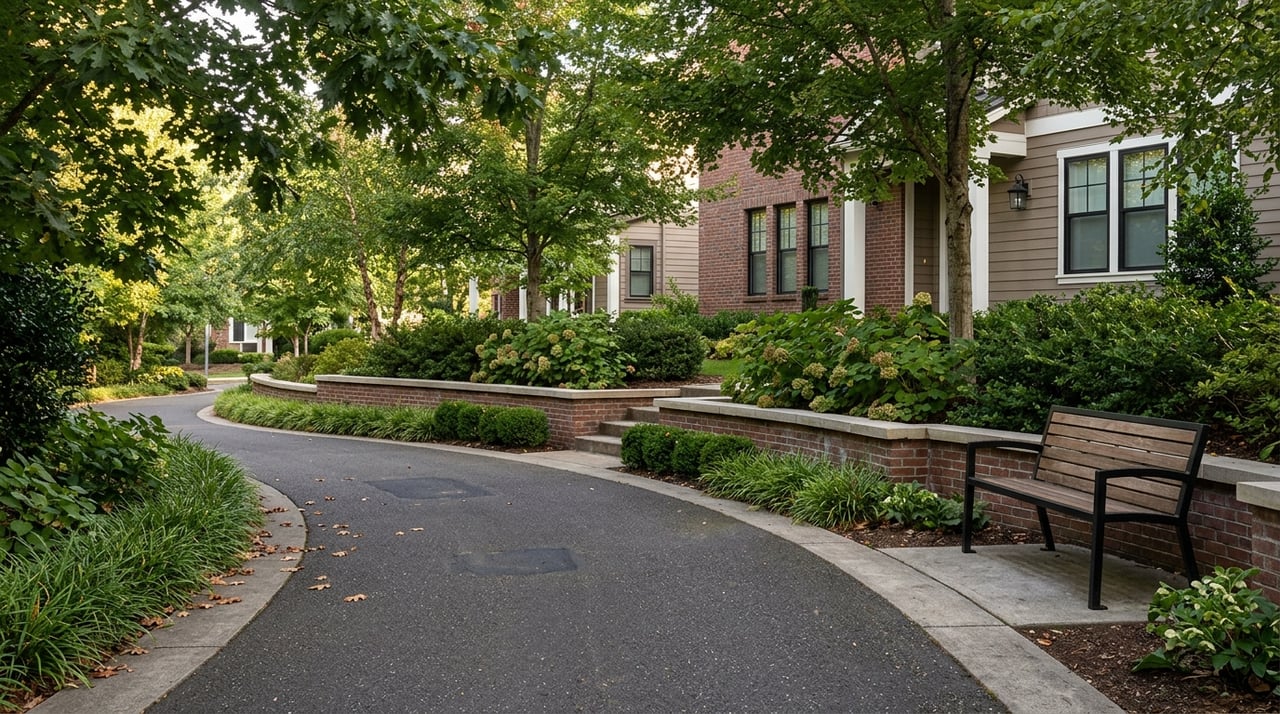
That is not just impressive on paper. It changes how the area functions day to day. The pathway system is separated from vehicle traffic and connects neighborhoods, schools, village centers, recreation areas, and employment areas.
For you, that can mean more options for walking, jogging, biking, or simply getting around without feeling boxed in by major roads. It also helps explain why Columbia often feels more connected and amenity-rich than a typical subdivision-focused suburb.
Why the Pathway System Stands Out
In many communities, trails are a nice extra. In Columbia, the pathway network is part of the original planning concept and a major part of everyday livability. It links residential areas with practical destinations, not just scenic ones.
That design can be especially meaningful if you value outdoor access and neighborhood connectivity. It also adds another layer of convenience for households looking at recreation, play areas, or easier local movement without needing to drive for every short trip.
Columbia’s Three Lakes
Columbia Association identifies three main lakes within the community, and each contributes to the local lifestyle in a different way:
- Lake Kittamaqundi in Town Center, a 27-acre man-made lake
- Lake Elkhorn in Owen Brown, a 37-acre lake
- Wilde Lake, a 22-acre man-made lake that flows downstream into Lake Kittamaqundi
These lake areas support fishing, kayaking, canoeing, picnics, and waterfront strolling. Columbia Association also notes that swimming, bathing, and ice-skating are not allowed in Columbia Association lakes and ponds.
For buyers comparing different parts of Columbia, lake access and nearby trails often become part of the lifestyle equation. Even if you are not on the water itself, being close to these open-space features can shape how a neighborhood feels from one day to the next.
Why the Lakefront Gets So Much Attention
If there is one place that captures Columbia’s community identity, it is the Lakefront at Lake Kittamaqundi. Columbia Association calls it the heart of Columbia, and it functions as both a recreation area and a gathering place.
The Lakefront hosts Lakefront Live, which includes free music, movies, and special events during the summer. The area is open from dawn to dusk and can be reached by multiple ramps, making it accessible and practical for casual visits, walks, and meetups.
This is also part of why Town Center draws so much interest. You get the combination of waterfront paths, events, nearby dining and retail, and close proximity to Columbia’s main commercial anchors. For many people, that mix creates the strongest sense of place in the community.
Housing Variety Across Columbia
Columbia’s planning framework includes a mix of housing types, including single-family low-density residential, single-family medium-density residential, apartments, and townhouse areas. That range is part of why Columbia appeals to such a wide variety of buyers and sellers.
You can see that same range reflected in the broader Downtown Columbia plan, which is intended to support a full-spectrum and diverse housing mix, including affordable options for low-, moderate-, and middle-income households. In simple terms, Columbia was planned to offer more than one kind of living experience.
That matters if you are deciding between a condo, townhome, or single-family home, or if you are selling and want to understand your home’s position in the larger market. Columbia is not one-note, and your strategy should reflect the specific village, housing type, and lifestyle fit involved.
Getting Around Columbia
For commuters, Columbia offers strong road access and several transit connections. Columbia Association says the community is served by six Howard Transit routes, several MTA routes to Washington and Baltimore, and weekday commuter buses that connect to the Washington Metro system.
Major roadways serving Columbia include US 29, I-95, MD 32, MD 108, MD 100, and MD 175. There are no rail stations within Columbia itself, but Howard Transit buses serve the Dorsey MARC station.
That setup gives you flexibility, especially if your work or routine takes you toward Baltimore, Washington, or other parts of central Maryland. Columbia’s location between Baltimore and Washington, D.C. is one of the reasons it stays on the radar for both local movers and relocation buyers.
Everyday Convenience in Columbia
Beyond the villages and pathways, Columbia also stands out for how many daily-use destinations and facilities are built into the community. Columbia Association points to Howard County General Hospital, Howard Community College, and The Mall in Columbia as key anchors.
It also operates and maintains more than 60 community facilities, including three full-service fitness clubs, indoor pools and 23 outdoor pools, five tennis clubs, two golf courses, an ice rink, an art center, a dog park, a sports park, a skatepark, and a youth and teen center. That breadth of amenities helps explain why life in Columbia can feel unusually self-contained.
If you are evaluating whether Columbia fits your lifestyle, this is often the deciding factor. The combination of organized villages, connected pathways, lake areas, and community facilities creates a version of suburban living that is structured, active, and highly functional.
What Buyers and Sellers Should Keep in Mind
If you are buying in Columbia, it helps to think beyond square footage and finishes. You will also want to understand which village a home is in, whether covenants affect exterior plans, how close you want to be to pathways or lakes, and whether Town Center access matters to your routine.
If you are selling, those same details can become part of smart positioning. A home’s relationship to village identity, trail connectivity, lake access, or Town Center convenience may help shape how it is presented to the market. That is where a strategic approach matters most, especially in a community with this many moving parts.
Living in Columbia is not just about picking a house. It is about choosing how you want the community to work for you.
If you are thinking about buying or selling in Columbia, Anthony Lacey can help you make a clear, well-informed move with a strategy built around your goals.
FAQs
What is Columbia, MD known for?
- Columbia is known as a planned community in Howard County organized around 10 villages, extensive open space, 114 miles of pathways, three lakes, and a central Town Center area.
How are Columbia, MD villages different from neighborhoods?
- Columbia’s villages have their own nonprofit civic associations and board representation, and they help organize resident resources, programming, communication, and covenant matters.
What is the downtown area in Columbia, MD?
- Columbia’s downtown-style area is centered around Town Center, Lake Kittamaqundi, and the Merriweather District rather than a single traditional downtown block.
What should homebuyers know about Columbia, MD covenants?
- Columbia Association says covenants are recorded in Howard County land records and set exterior alteration standards that stay with the property, so buyers should review them before planning outside changes.
Are there trails and lakes throughout Columbia, MD?
- Yes. Columbia has 114 miles of pathways, more than 3,600 acres of open space, and three main lakes: Lake Kittamaqundi, Lake Elkhorn, and Wilde Lake.
Is Columbia, MD good for commuting?
- Columbia offers access to major roads including US 29, I-95, MD 32, MD 108, MD 100, and MD 175, plus Howard Transit and MTA bus connections to surrounding job centers.